
“I wanted to create a narrative that celebrated queer life, particularly queer Arab life, with unapologetic joy and tenacity.”
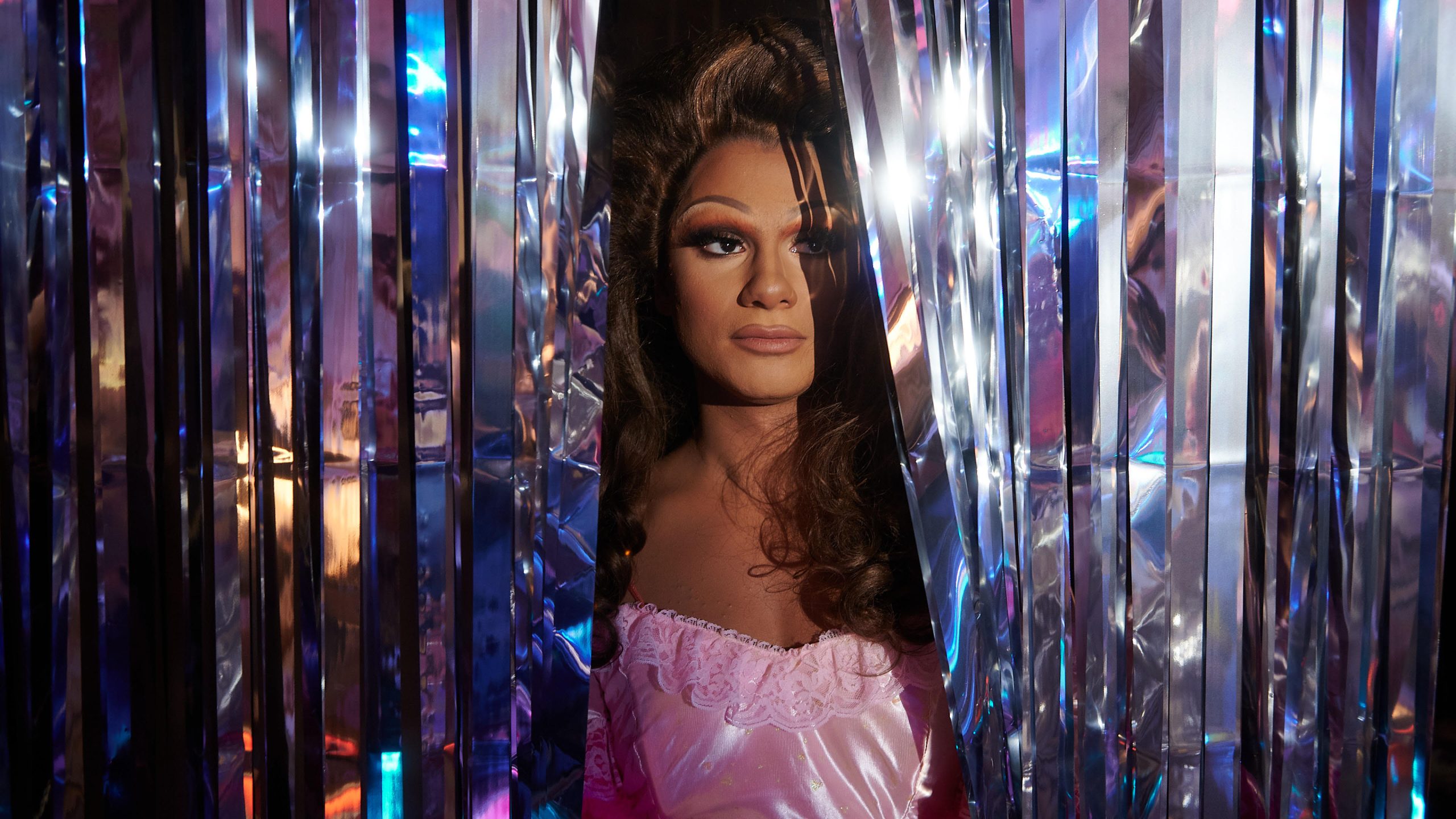
These are the words director Amrou Al-Kadhi used to describe their debut feature film, Layla, following the self-discovery journey of the titular character Layla, a young, non-binary Arab drag queen struggling with the nuances of their identity. The result is a colorful and emotional film, full of just as much fun and flair as its director.
Over the course of the film, Al-Kadhi’s script and characters take on complex identity explorations, from queer binary constructs to the challenge of being a child of Arab immigrants, and from “femme phobia” in the LGBTQ+ community to finding ‘self’ in a digital age.
“I was tired of endless trauma narratives surrounding the queer Arab experience,” Al-Kadhi says. In avoiding those traumas, Al-Kadhi crafted a story of genuine connection, discovery and realistic heartbreak, a rarity for queer performers, especially those in drag.
“Drag creates an accessible fantasy for the audience, acting as tokens for ‘woke’ societies” explains Al-Kadhi. “They are constantly modifying themselves for the role, and even in everyday life Layla transcends many worlds, often conflicting ones.”
In Layla, a character is presented with that same facade of shiny surface candy, but is allowed to deliver what actor Bilal Hasna describes as ‘raw queer meat.’ Notably, Layla is permitted to have an inherent sexuality. Often, drag queens are only permitted to exist in a performative space. Layla, however, strays from the typical masc and cis-centered queer narrative, allowing femme energy and discovery to be on full display in the bedroom, a rarity among gay romances.
Bilal Hasna delivered a remarkable performance as Latif-turned-Layla, embodying every contradiction of the role with confidence. Hansa allowed for endless self-modification–it was indeed striking how much the character’s aura morphed based on clothing and appearance. Though never fully realized or integrated, Hasna slowly allowed those identities to merge, bringing Layla (as a drag queen) poise and energy to the titular character’s daily persona.
“Layla (and by translation, Bilal) was the ultimate shapeshifter,” says Al-Kadhi. “Both were constantly trying to embody the in-between.”
Other characters in the film acted as ideal contrasts for Layla’s spark and joy. Best friend character Princy (played by Safiyya Ingar who fans may recognize from the Witcher franchise on Netflix) embodies a darker aesthetic against Layla’s fluorescent one, bringing a healthy dose of attitude to go along with it. On the other hand, love interest Max brings a beige-toned, gay cis-male opposition to Layla’s full-of-glitter life, but the performance itself was anything but bland.
When casting Max, the producers landed on soft-spoken Louis Greatorex to embody the still-navigating lover. When browsing auditions, many actors seemed to fill the two-dimensional ‘bad guy’ jock trope. Greatorex’s corporate exterior and heartfelt performance allowed for a more realistic portrait of a gay relationship in the modern age, allowing Al-Kadhi’s story to play out without feeling contrived.
Though Layla’s final transformations may not be fully realized or completed, the film leaves the door wide open for fluidity and potential, offering a sunny future for non-binary youth.
“This film demands a full life of dignity and love for Layla by creating a new world for them to embody.”